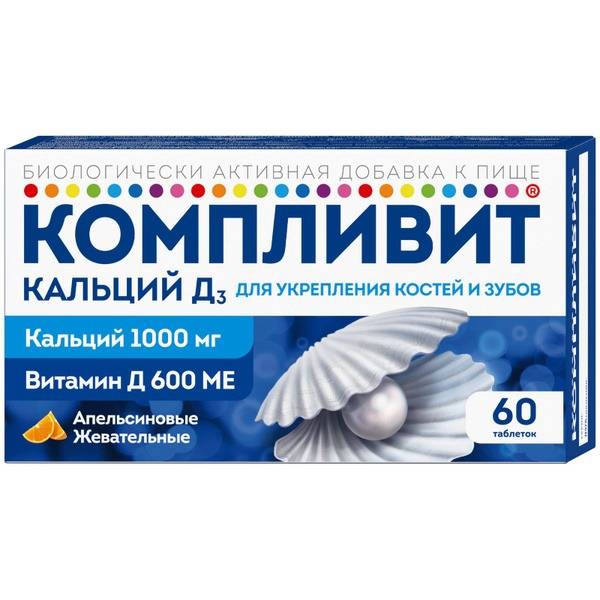
Complivita® Calcium D3 is a dietary supplement whose effectiveness is based on the properties of its components (supported by scientific data):
A crucial mineral, comprising the largest portion of ions in the human body. On average, the human body contains approximately 1 kg of calcium, with about 99% located in the skeletal system. Calcium plays several vital roles:
Adequate calcium intake is particularly important during growth spurts, pregnancy, and breastfeeding.
A fat-soluble vitamin crucial for calcium absorption in the intestines. It maintains necessary calcium and phosphate levels in the blood, essential for bone mineralization. Vitamin D3 is also vital for bone growth and remodeling. Sufficient vitamin D prevents rickets in children and bone mineralization disorders in adults. The combined use of calcium and vitamin D3 inhibits the overproduction of parathyroid hormone (PTH), which stimulates excessive bone resorption (calcium leaching from bones). Together, they are used to reduce the risk and as part of the complex treatment of osteoporosis. Vitamin D's functions extend beyond calcium-phosphorus metabolism; it also modulates immune function, supports reproductive health, maintains cardiovascular health, influences fat, glucose, and insulin metabolism, and regulates the development and function of the nervous system. Low vitamin D levels may precede age-related cognitive impairment and neurodegenerative diseases.
Scientific studies link calcium deficiency to conditions like osteopenia (reduced bone mineral density and mass) and osteoporosis, increasing the risk of fractures and musculoskeletal injuries. Research indicates that calcium and vitamin D supplementation is associated with a reduction in bone mineral density loss and fractures. Large-scale clinical trials demonstrate a correlation between supplemental calcium and vitamin D intake and a decreased risk of fractures and bone mass loss. Insufficient calcium intake also leads to the formation of structurally and functionally inferior hydroxyapatite crystals in tooth hard tissues, reducing tooth resistance to caries and increasing the risk of enamel defects.
This scientific evidence highlights the critical role of calcium and vitamin D3 in maintaining optimal bone and tooth health.






 US: temporary delays — postal services aligning new import rules,
  EU: 1–2 weeks, 🌍 Worldwide: 1–4 weeks ✈️