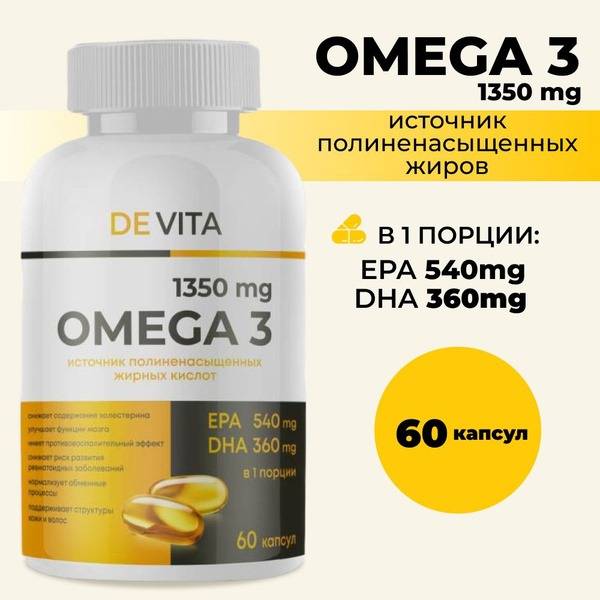
Omega-3 30% (EPA 540mg, DHA 360mg) - De Vita - 60 Capsules for Brain, Skin & Memory Support
$30
Omega-3 30% (EPA 540mg, DHA 360mg) - De Vita - 60 Capsules for Brain, Skin & Memory Support
Enhanced and Translated Description
Omega-3 fatty acids are essential for human health, playing a vital role in bodily functions and overall well-being. They've been the subject of more clinical trials than almost any other substance, with over 300 studies demonstrating positive effects on cardiovascular health, brain function, skin health, and the nervous system.
Omega-3s are crucial for building cell membranes, supporting optimal brain function, and providing anti-inflammatory benefits. Chronic inflammation is often at the root of many diseases. The most important Omega-3 polyunsaturated fatty acids are alpha-linolenic acid (ALA), eicosapentaenoic acid (EPA), and docosahexaenoic acid (DHA). These are essential fatty acids; our bodies cannot synthesize them without dietary intake.
Omega-3s are naturally found in plants and algae. Fish consume algae, converting ALA into EPA and DHA. Consuming wild-caught fish is a good source of these essential fatty acids. Humans also convert ALA to EPA and DHA, but with only about 5% efficiency in men and slightly higher in women. ALA is abundant in various seeds and oils, including flaxseed, walnuts, chia seeds, hemp seeds, and many common vegetable oils. This conversion rate decreases with age.
Why are EPA and DHA Omega-3s vital?
- Lower Bad Cholesterol: Contribute to healthy cholesterol levels.
- Enhance Brain Function and Memory: DHA is crucial for brain health; sufficient levels reduce the risk of cognitive decline.
- Boost Immunity: Adequate DHA levels help prevent inflammation-related diseases.
- Improve Skin Health: Contribute to healthy, radiant skin.
- Elevate Mood: Support overall mental well-being.
Numerous studies show that Omega-3s positively impact brain function and structure in older adults, with significant improvements in cognitive function observed after just 6.5 months of supplementation. In 2013, The American Journal of Clinical Nutrition published research demonstrating that DHA supplementation improved memory and reaction time in young adults.
The World Health Organization (WHO) and the European Food Safety Authority (EFSA) recommend an additional 250mg of DHA daily. The American Heart Association (AHA) advises eating fatty fish at least twice a week or taking 500mg of Omega-3s (EPA + DHA) daily as a convenient alternative for cardiovascular health.
De Vita Omega-3 30% Supplement Benefits:
- Optimal EPA and DHA Dosage: Provides a scientifically formulated balance of EPA and DHA.
- Noticeable Results: Experience the significant benefits of regular supplementation.
- Safe and High-Quality: Manufactured according to the highest food safety standards.